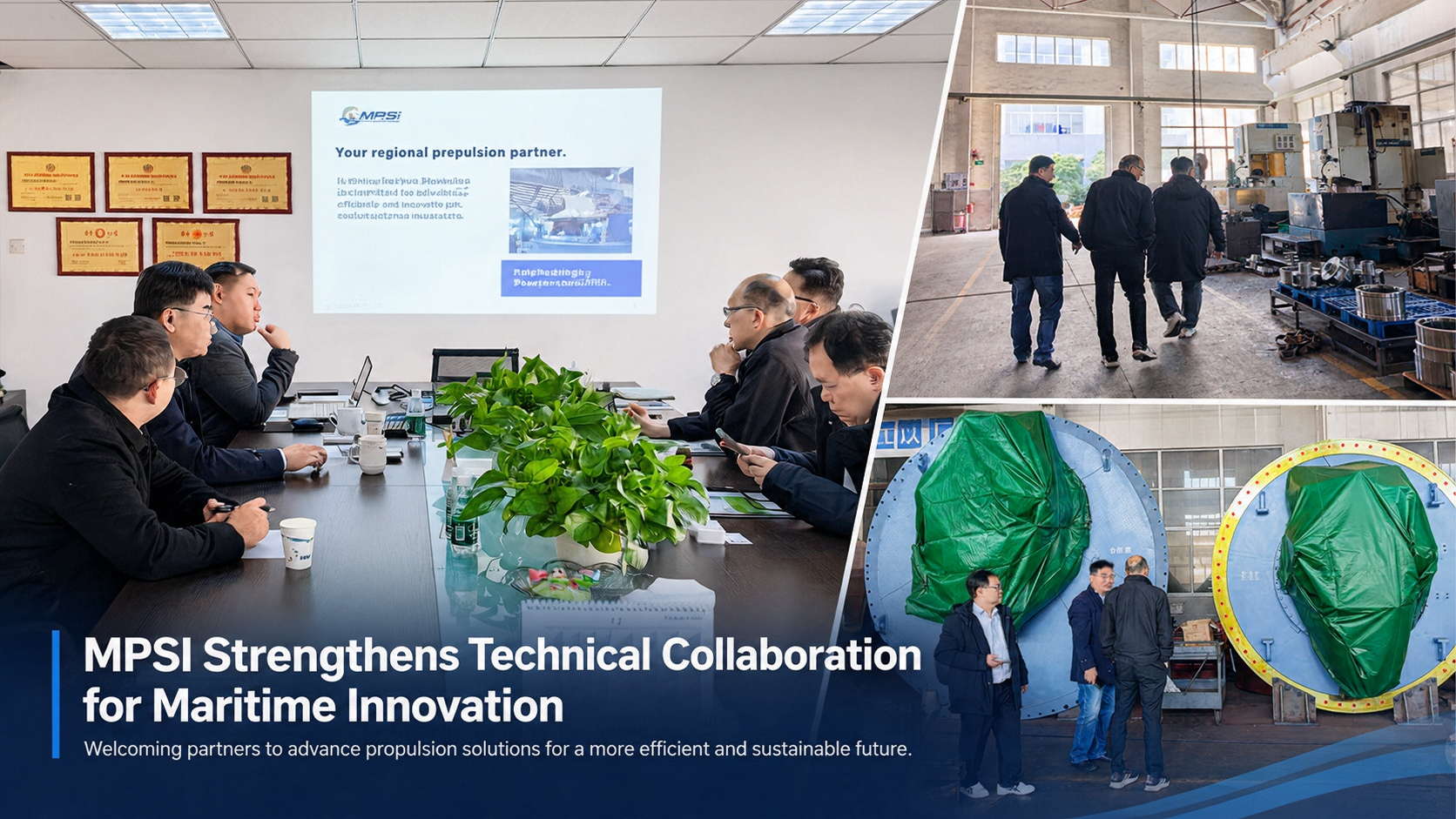
Engineering a More Efficient 23-Metre Battery Electric ASD Tug: MPSI and Vallianz in Technical Collaboration
Wuxi, China | November 2026
With the growing interest in marine electrification, the development of battery-electric vessels requires careful consideration of the entire propulsion architecture. Beyond the selection of electric motors, propulsion efficiency depends on how individual components are configured, integrated, and optimised to meet the vessel's intended operating profile.
Key Engineering Considerations
The technical discussions covered several important aspects of the vessel's propulsion system and machinery configuration.
1. Azimuth Thruster Selection and Propulsion Configuration
Evaluating the appropriate azimuth thruster configuration is essential to achieving the required thrust performance, manoeuvrability, and operational flexibility. The selection process must consider vessel characteristics and intended operating conditions.
2. Propulsion Efficiency and Energy Consumption
For battery-electric vessels, energy efficiency directly influences operational endurance and overall vessel performance. Optimising propulsion system performance is therefore an important consideration in managing onboard energy consumption.
3. Propeller Design and Bollard Pull Performance
Propeller characteristics play a significant role in determining thrust generation and propulsion efficiency. The discussion explored the relationship between propeller design, bollard pull requirements, and overall propulsion performance.
4. Machinery Arrangement and Space Optimisation
A battery-electric propulsion architecture introduces different machinery arrangement considerations compared with conventional diesel-powered vessels. Equipment positioning, system accessibility, and onboard space utilisation must be considered throughout the engineering process.
5. Electric Motor and Azimuth Propulsion Integration
Effective integration between electric motors and azimuth propulsion units is fundamental to achieving a coordinated propulsion system. Mechanical, electrical, and control interfaces must work together to support reliable vessel operation.
6. Operational Reliability and Maintainability
Long-term performance extends beyond initial vessel delivery. Equipment reliability, maintenance accessibility, and lifecycle considerations are important factors in developing a practical marine propulsion solution.
An Integrated Approach to Marine Electrification
The transition towards battery-electric marine vessels involves more than replacing conventional diesel engines with electric motors.
A successful propulsion solution requires an integrated engineering approach that considers vessel design, hydrodynamic characteristics, propulsion configuration, electrical integration, and energy management as interconnected elements.
For ASD tugs, where manoeuvrability and bollard pull performance are critical operational considerations, selecting and integrating the appropriate propulsion components is particularly important.
These engineering considerations help establish the foundation for a vessel that is not only energy-efficient but also capable of meeting its intended operational requirements.
Strengthening Technical Collaboration
MPSI appreciates the Vallianz team's participation and valuable contributions to the technical discussions:
Foo Siang Lim – Head of Engineering
Chua Mingseh – Senior Manager, Commercial Procurement
Cheong Chun Heng – Assistant Manager, Commercial Procurement
The engagement reflects the importance of close collaboration between marine equipment specialists, shipowners, and engineering teams in addressing the evolving technical requirements of the maritime industry.
Through its marine propulsion capabilities and engineering collaboration with Wuxi Ruifeng Marine Power System Co., Ltd., MPSI continues to support the development of practical marine propulsion solutions for the Asia-Pacific market.
Engineering the right propulsion solutions for the vessels of tomorrow.
For marine propulsion enquiries and technical discussions:
Marine Power System Indonesia (MPSI)
Website: https://www.mpsiasia.com
Email: marketing@mpsiasia.com
WhatsApp: +62 855-753-8888